
If you are a fan of architecture, design, or the history of Los Angeles, you will love walking tours conducted by the Los Angeles Conservancy. I’ve been on several of its tours, both walking and virtual. I recently took their Art Deco L.A.: Zigzags, Spires, and Stories tour in downtown Los Angeles. There are many Deco-designed buildings mixed in with other eras in the downtown area.
Watch my quick video tour
The L.A. Conservancy is a nonprofit organization dedicated to preserving and celebrating the region’s rich architectural and cultural heritage. Founded in 1978, it works to protect historic buildings, neighborhoods, and landmarks throughout Los Angeles County through advocacy, education, and preservation efforts. It hosts popular walking tours, special events, and educational programs throughout the city that showcase the stories behind Los Angeles’ iconic architecture.
Buildings like the Cinerama Dome, Bullocks Wilshire, The Wiltern Theatre, and historic movie houses have been saved from demolition by the Conservancy. Some have been repurposed but still retain their architectural style.
What I particularly love about the Conservancy tours is that its volunteer guides are deeply knowledgeable about their routes. Our guide is a member of the Art Deco Society, another organization that conducts events and tours of Art Deco architecture in and around the L.A. area. Its members often dress in costumes of the era. I attended one of their events at the Wolves bar next to the Alexandria Hotel in DTLA.
Highlights from my tour
Our tour took place on a very hot summer day, but there were still about 11 attendees. Our guide has been conducting this tour for over 15 years. She knew where to go and kept us in the shade during our two-hour guided route.
Before we began, she pointed out some of the buildings surrounding our meeting place at Pershing Square. We then walked to the Southern California Edison Building across the street. It was built in 1931 by architects Alison & Alison and is now a bank. She pointed out that a concrete building was installed just in front of the old building that clearly does not match its design.
At the front of the old part of the building are depictions symbolizing electricity, innovation, and the promise of modern living. Inside are murals by artist Hugo Ballin, whose work appears in other Los Angeles buildings of the same era.
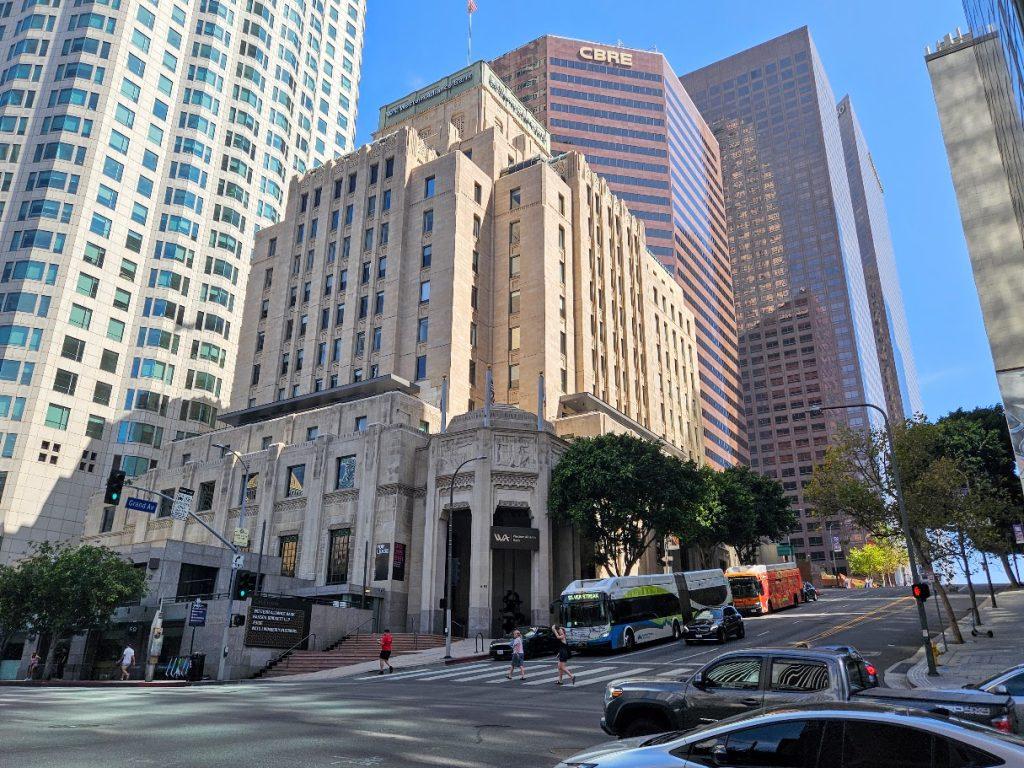
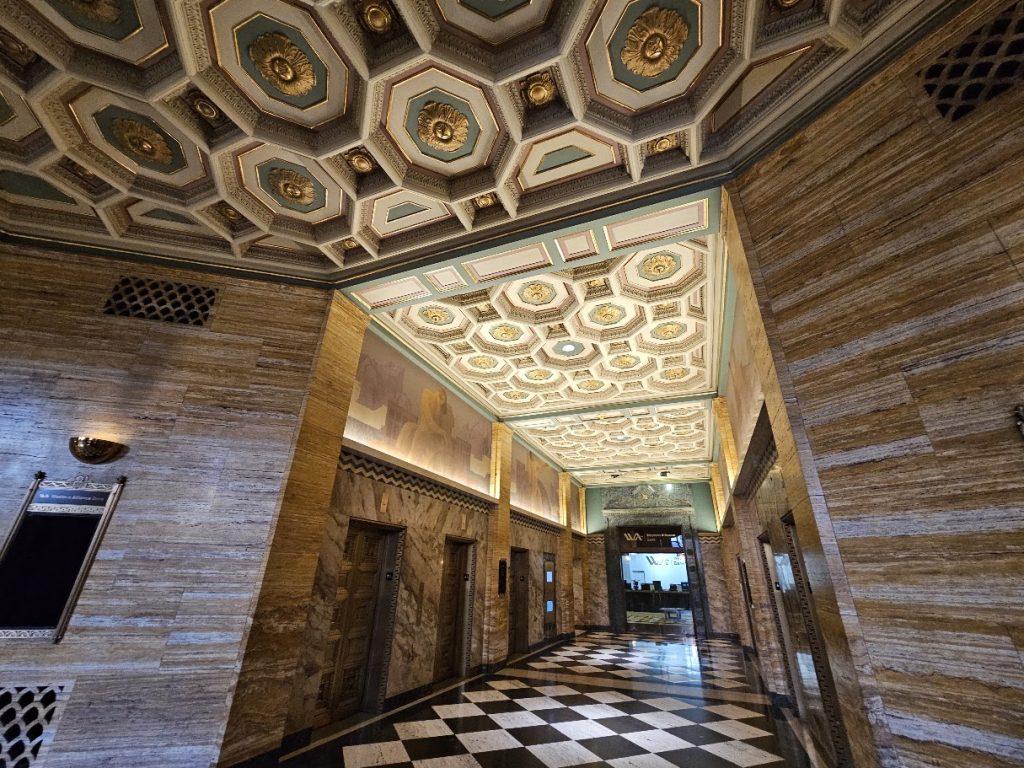
The building has a beautifully preserved lobby area with a few modern touches to accommodate the bank.
We also visited the Oviatt, which houses the restaurant and club Cicada. It was originally a high-end men’s clothing store and is one of the finest examples of Art Deco luxury. The building was completed in 1928 and was designed by Walker & Eisen.
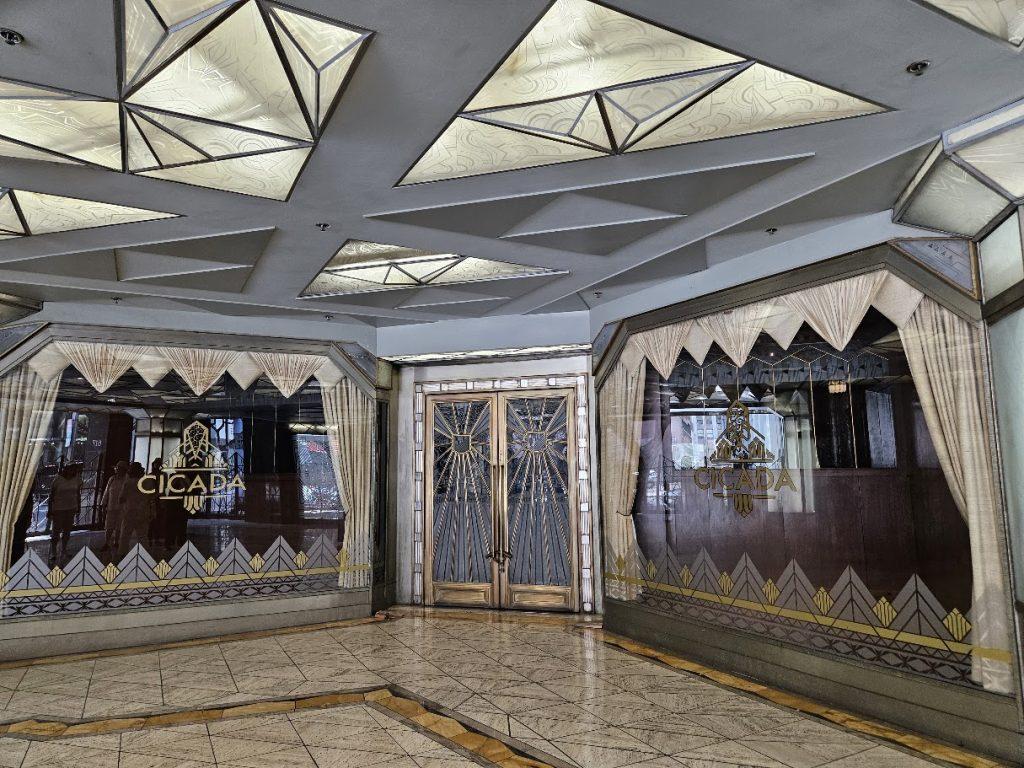
James Oviatt imported René Lalique glass from France, which can be seen on the entrance door as well as custom bronze figures, marble, exotic woods, and other decorative details.
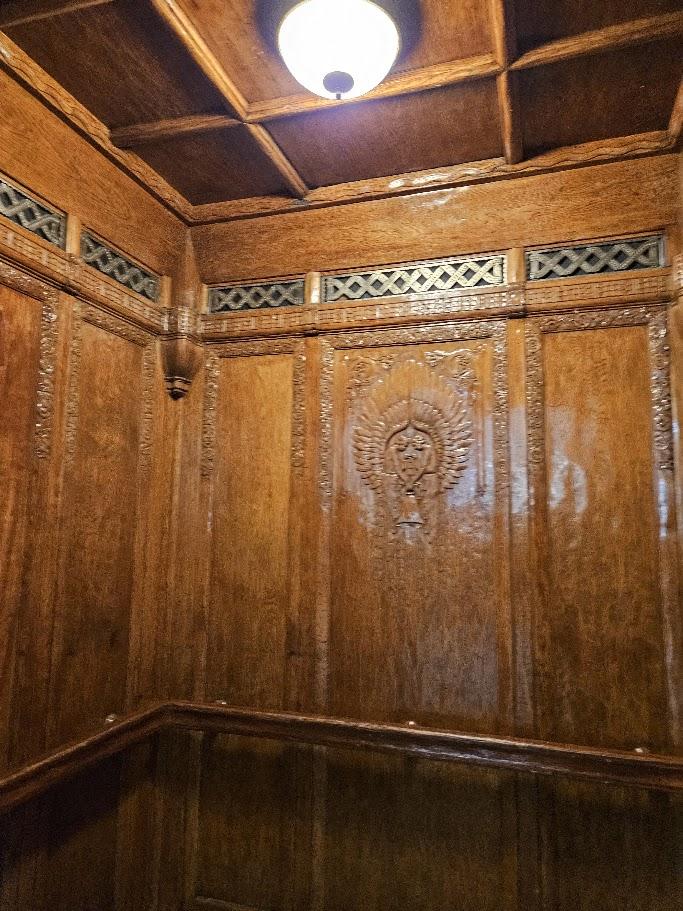
We were lucky to see the inside of the elevators, which are still used for offices.
Cicada is now used for special events and has been seen in many films and television shows.
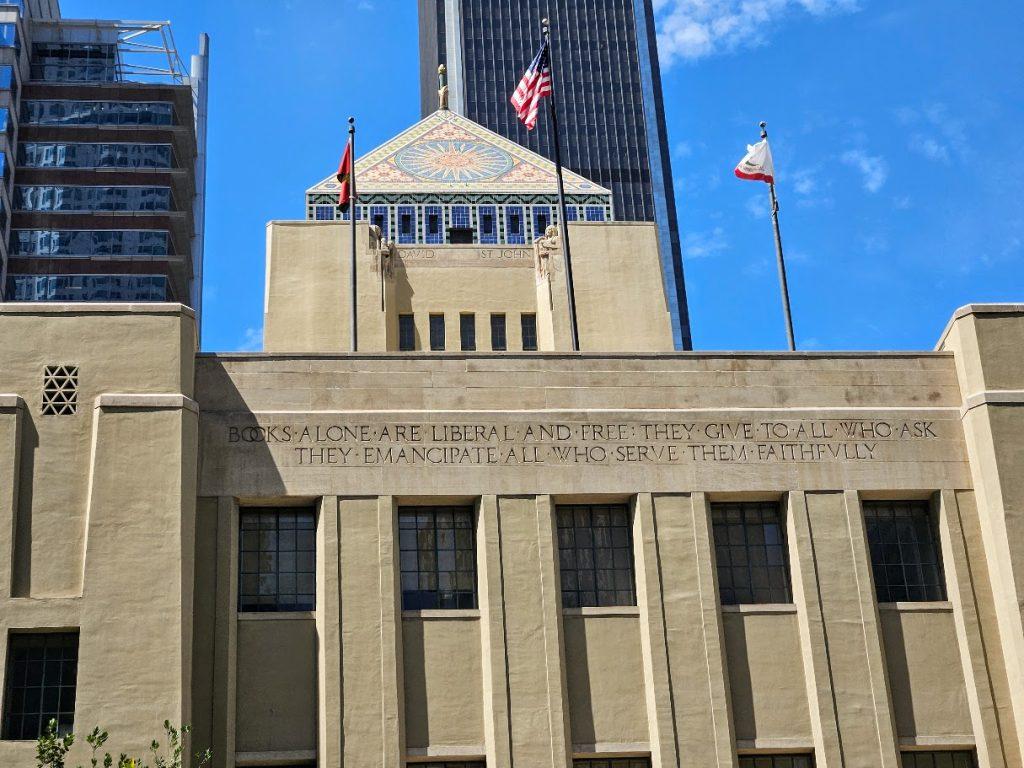
We looked at several other buildings, including the exterior of the Central Library, which celebrated 100 years in DTLA in 2026.
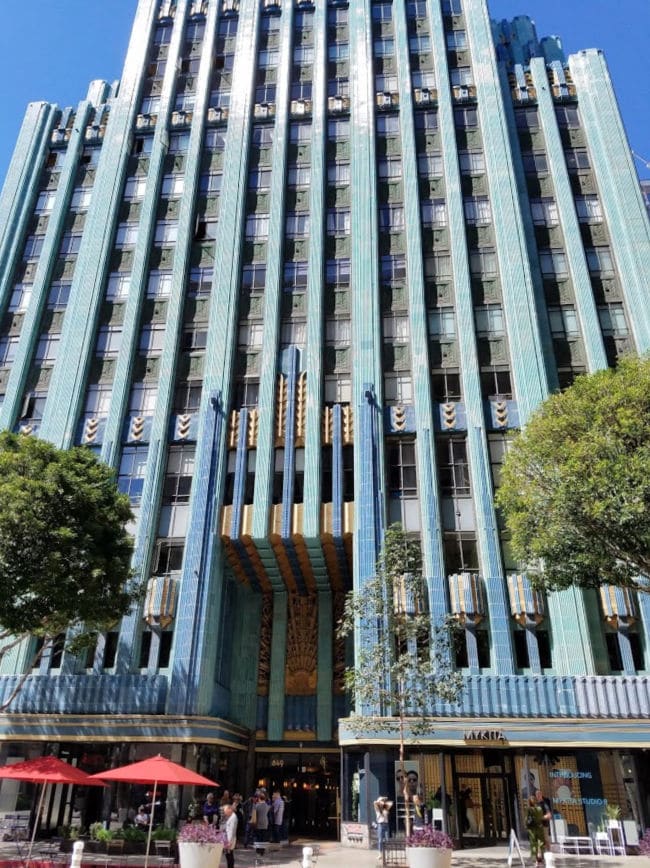
One regret was that we didn’t make it to the Eastern Columbia Building, which was further away, because the heat was brutal. It is one of the city’s most photographed landmarks. Its stunning turquoise terra cotta tiles, gold accents, and four-sided clock tower set it apart from the rest. The structure was completed in 1930 and designed by Claud Beelman.
What is Art Deco architecture and how did it come to Los Angeles?
During the mid-1920s, Los Angeles was known for its oil production and was booming with glittery banks, insurance companies, theaters, department stores, and corporate headquarters. Before Art Deco became popular, buildings were designed in Beaux-Arts, Classical Revival, and Spanish Colonial styles. They emphasized symmetry, ornate columns, arches, elaborate stone carvings, and details inspired by Greece, Rome, and Spain.
Art Deco symbolized modernism by embracing clean lines, geometric patterns, stepped forms, and stylized ornament. Modern materials of the time included aluminum, chrome, and glass. Other materials included bronze, marble, and colorful terra cotta. The design featured zigzags, chevrons, sunburst patterns, and stylized flowers. It was clearly futuristic. Think of the 1927 film Metropolis.
The design concept took its name from the Paris 1925 Exposition Internationale des Arts Décoratifs et Industriels Modernes, which was shortened to Art Deco.
Many of the Art Deco buildings in downtown Los Angeles were erected by oil companies. Some of the older Beaux Arts buildings had Art Deco facades built on the front as updates. The original design can be seen on the sides and back. Other updates after Art Deco died out included ugly pebbled concrete and other mismatched materials.
You may also enjoy these L.A. Conservancy tours:
- Los Angeles City Hall
- Historic Downtown: Old Buildings, New Stories
- Curtains Up on Broadway: L.A.’s Historic Theatre District
- Union Station: America’s Last Great Train Station
- Angelino Heights: L.A.’s Secret Victorian Neighborhood
- Downtown L.A.’s Modern Skyline: Stories in Steel and Stone
- The Biltmore Hotel: Host of the Coast
I recommend becoming a member of the L.A. Conservancy to enjoy very affordable discounted tours and events. Your donation helps to preserve Los Angeles’s unique architecture and history.
Places to Stay in Downtown Los Angeles
Click on the map below.

Leave a Reply