
The World Premiere of Josefina López’s play Eléctrico is currently playing at CASA 0101 Theater in Boyle Heights through November 2, 2025, and it couldn’t be timelier.
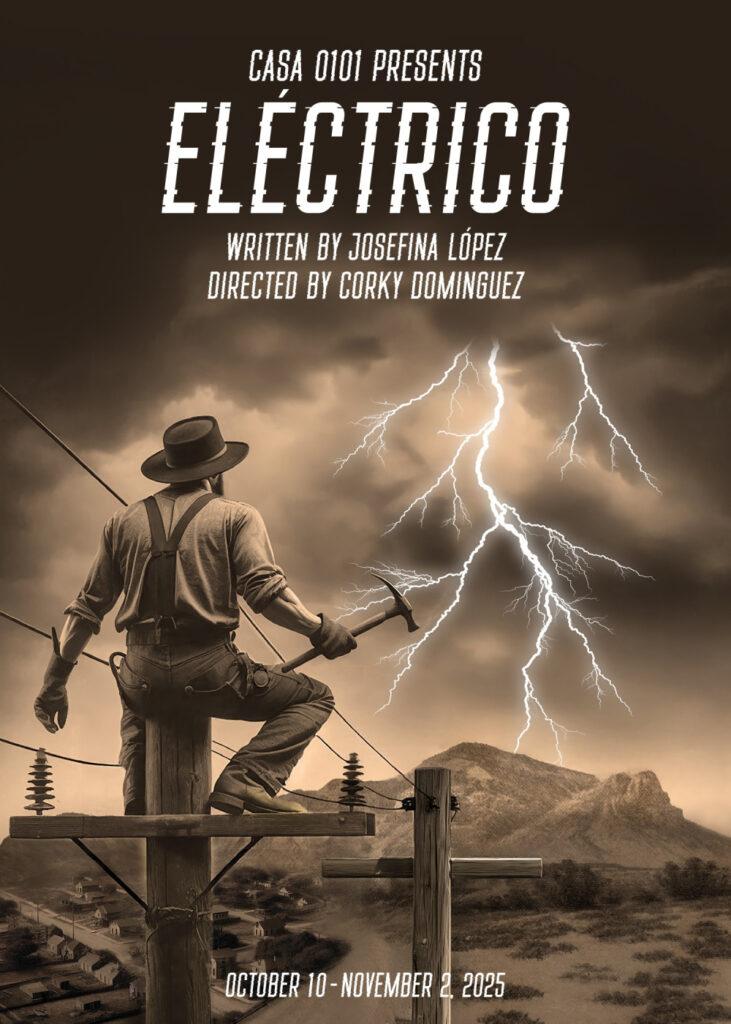
The play takes place in a small Texas town in 1910 and tells the story of the extreme prejudice between whites and Mexican Americans during that time.
The play opens after a white sheriff and other townspeople have lynched a Mexican American and hung him on top of an electrical pole, taking out the power in that area. An electrician is called into town to solve the problem, but the sheriff and his men refuse to take down the corpse to allow the electrician to work. They insist it be displayed to instill fear in the town’s brown residents.
Lynchings of Mexican Americans, called Tejanos, (Texans of Mexican descent) during that time were prevalent, but do not appear in U.S. history books, making the play relevant to our current government’s anti-immigrant deportation and attempts to “sanitize” the negative aspects of racial injustice and cruelty in America’s past.
Some of the most heinous racial violence in the United States took place along the Mexico-Texas border between 1910 – 1920. This included long-time Mexican American residents who had been living in Texas before the Treaty of Guadalupe Hidalgo in 1848.
Texas Rangers and other law enforcement officers executed Mexican Americans without due process by lynching, burning, decapitating, and torturing them for minor infractions.
In the play, a widow confronts the Electrician, asking him to take her husband’s body down from the electrical pole. He confronts the sheriff, who threatens him if he does it, but he removes the body anyway and brings it back to the widow.
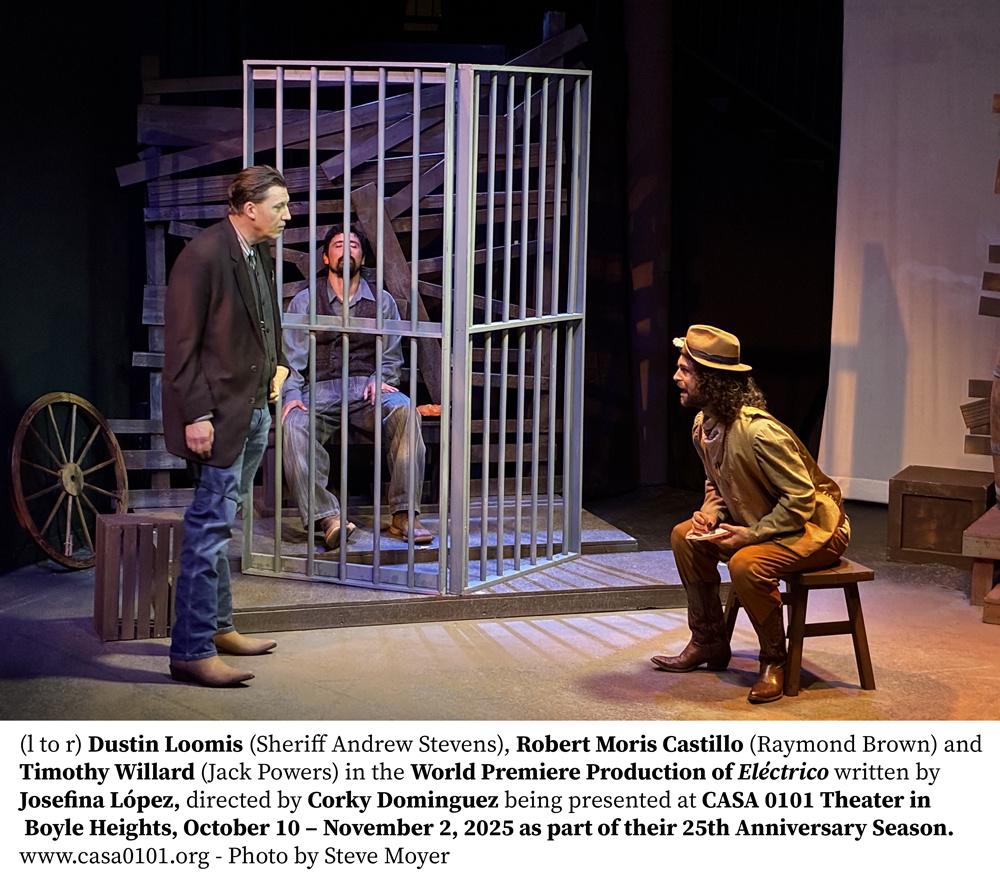
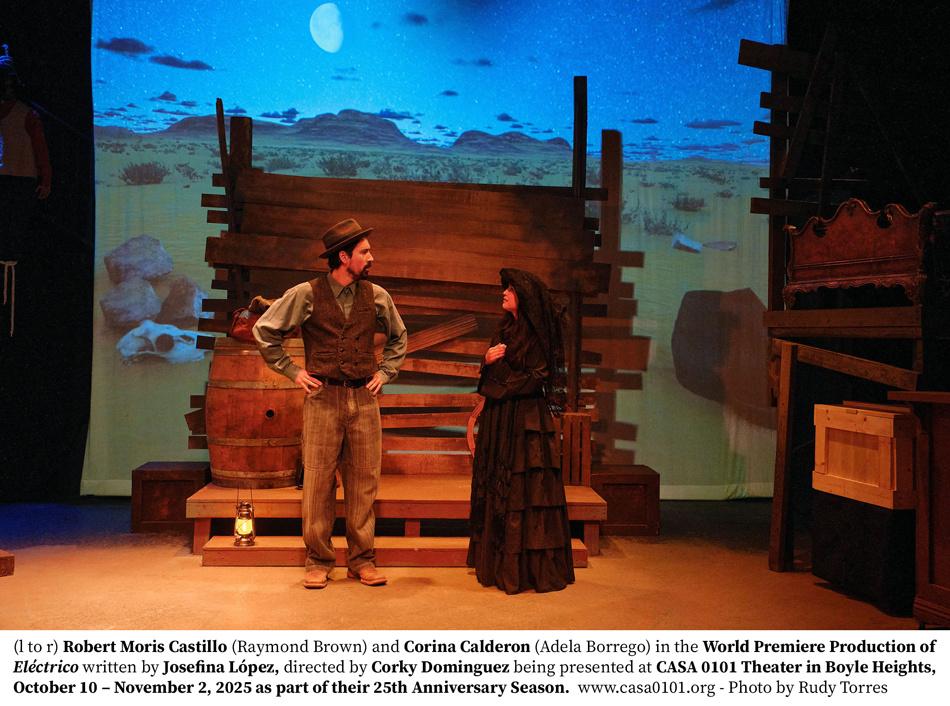
The Electrician is played by Robert Moris Castillo with an understated but effective melancholy, and the Widow is played by Corina Calderon with fiery grace. They form a friendship. At one point, it is revealed that the Electrician is part Mexican.
During his time in town, the Electrician stays in the town’s hotel, where a feisty barmaid in the saloon, played by Casara Clark, tries to seduce him.
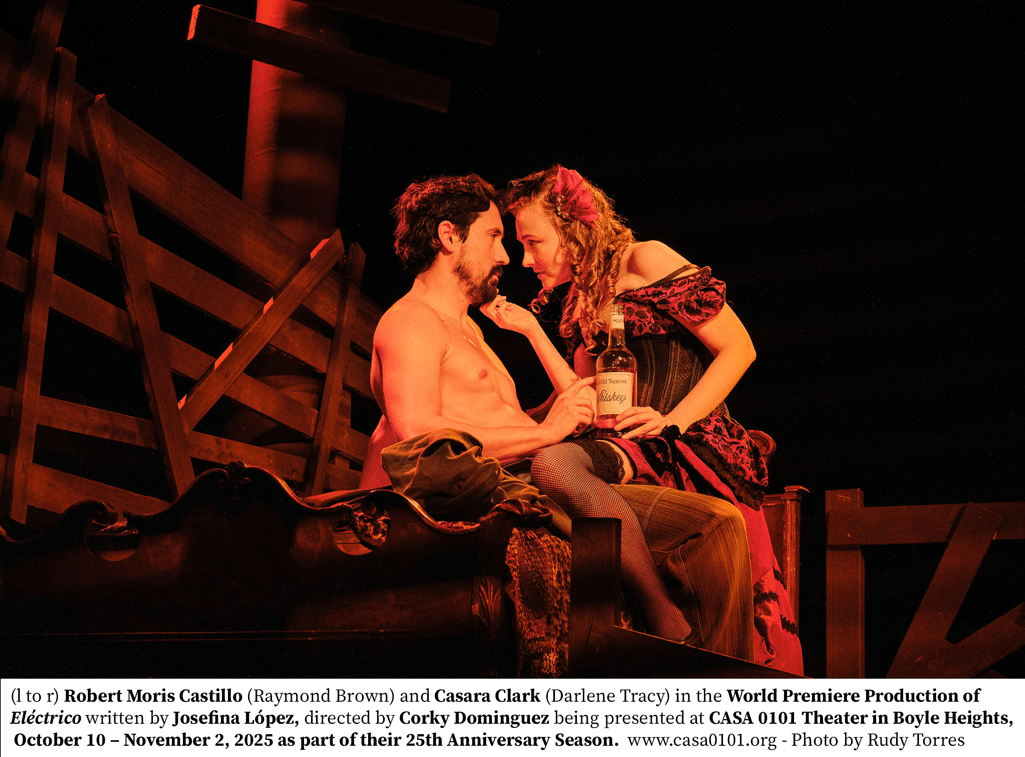
After getting him drunk, he tells her he is grieving the death of his wife and believes he killed her. The wife was going to leave him because of his drinking. When she announced her departure, he held on to her, but she broke away and fell down the stairs. Clark also plays his wife in a dream sequence.
In a delirious and drunken state, while remembering the incident, he roughs up the barmaid, who runs off and seeks revenge.
After another hanging, the Tejanos in town flee their homes in fear, even though the Mexican Revolution, only months away, is brewing. The Widow stays to fight for justice.
The bigoted Sheriff, played by Dustin Loomis, made my heart ache to think there are still people like him in America. He is cruel and heartless.
Francisco Rivas Medina melds the production together with a Mexican musical narration and also plays the part of Juan Carlos, a Mexican male farmer.
Timothy Willard, as white Jack Powers, does a comical turn as one of the sheriff’s goons.
Eléctrico is artfully directed by Corky Dominquez with moody and dark wooden sets by César Rentana-Holguín.
I won’t give away the ending, but it is electrical.
Leave a Reply